
MRI vs CT Scan: Differences, Uses, and Costs Explained
MRI vs CT Scan: Differences, Uses, and Costs Explained | Medical imaging technology has transformed the way doctors diagnose and treat diseases. Two of the most commonly used imaging tests are MRI and CT scans. Both provide detailed images of the inside of the body, but they work differently and are used for different medical situations.
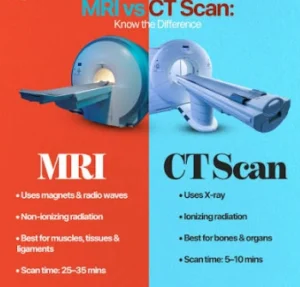
Understanding MRI vs CT Scan: Differences, Uses, and Costs can help patients feel more prepared before undergoing a diagnostic test. While an MRI uses powerful magnets and radio waves to create detailed images, a CT scan uses X-rays combined with computer technology to produce cross-sectional images of the body.
The choice between an MRI and CT scan depends on several factors, including the body area being examined, the medical condition being investigated, urgency, cost, and patient safety considerations.
In this guide, we will explain the key differences between MRI and CT scans, their common uses, advantages, disadvantages, and average costs.
What Is an MRI Scan?
MRI stands for Magnetic Resonance Imaging. It is an advanced medical imaging procedure that uses strong magnetic fields and radio waves to create highly detailed images of organs, tissues, muscles, and other structures inside the body.
Unlike CT scans, MRI does not use ionizing radiation. This makes MRI a preferred option for certain patients who need repeated imaging examinations.
During an MRI scan, the patient lies inside a large tube-shaped machine. The magnetic field temporarily changes the alignment of hydrogen atoms in the body. Radio waves are then used to create detailed images based on how these atoms respond.
MRI technology is especially effective for examining soft tissues that may not appear clearly on other imaging tests.
What Is a CT Scan?
A CT scan, also called a Computed Tomography scan, is an imaging test that combines multiple X-ray images to create detailed cross-sectional views of the body.
Unlike traditional X-rays, which provide a flat image, CT scans create layered images that allow doctors to see structures from different angles.
A CT scanner looks like a large circular machine. During the procedure, the patient lies on a table that moves through the scanner while X-ray detectors capture images.
CT scans are widely used because they are fast, reliable, and effective for diagnosing many emergency conditions.
MRI vs CT Scan: Key Differences
Understanding the differences between MRI and CT scans can help explain why doctors choose one test over another.
| Feature | MRI Scan | CT Scan |
|---|---|---|
| Technology | Magnetic fields and radio waves | X-rays and computer processing |
| Radiation Exposure | No ionizing radiation | Uses radiation |
| Scan Time | Usually longer | Usually faster |
| Best For | Soft tissues, brain, nerves, joints | Bones, injuries, emergencies |
| Image Detail | Excellent soft tissue detail | Excellent overall body imaging |
| Cost | Usually more expensive | Usually less expensive |
| Noise Level | Loud | Quieter |
| Emergency Use | Less common | Frequently used |
Both imaging methods are valuable, but they serve different purposes.
MRI vs CT Scan: Which One Provides Better Images?
There is no single answer to which imaging test is better because each technology has different strengths.
MRI Provides Better Soft Tissue Images
MRI is usually preferred for examining:
- Brain structures
- Spinal cord
- Ligaments
- Tendons
- Muscles
- Cartilage
- Internal organs
For example, doctors often use MRI scans to evaluate:
- Brain tumors
- Multiple sclerosis
- Spinal injuries
- Joint problems
- Soft tissue abnormalities
MRI creates extremely detailed images of soft tissues, making it one of the best tools for neurological and musculoskeletal evaluations.
CT Provides Faster Overall Imaging
CT scans are commonly preferred when doctors need quick answers, especially during emergencies.
CT scans are often used for:
- Bone fractures
- Internal bleeding
- Traumatic injuries
- Lung problems
- Abdominal conditions
- Stroke evaluation
Because CT scans can usually be completed within minutes, they are frequently used in emergency rooms.
MRI Uses: When Doctors Recommend an MRI Scan
MRI scans are commonly used for diagnosing conditions involving soft tissues and complex body structures.
Brain and Nervous System Imaging
Doctors may recommend an MRI to examine:
- Brain tumors
- Stroke damage
- Multiple sclerosis
- Brain infections
- Nerve disorders
MRI provides detailed images of brain tissue that help doctors identify abnormalities.
Spine and Back Problems
MRI is often used to diagnose:
- Herniated discs
- Spinal cord injuries
- Nerve compression
- Degenerative spine conditions
Because MRI provides excellent images of discs and nerves, it is often considered the preferred imaging method for many spinal conditions.
Joint and Sports Injuries
Athletes frequently undergo MRI scans to evaluate:
- Torn ligaments
- Muscle injuries
- Cartilage damage
- Tendon problems
MRI can identify injuries that may not appear on standard X-rays.
CT Scan Uses: When Doctors Recommend a CT Scan
CT scans are commonly selected when speed and detailed structural information are important.
Emergency Injuries
CT scans are frequently used after accidents or serious injuries because they quickly detect:
- Internal bleeding
- Bone fractures
- Organ damage
- Head trauma
Fast results can help doctors make immediate treatment decisions.
Lung and Chest Imaging
CT scans can provide detailed images of the lungs and chest area.
Doctors may use CT scans to evaluate:
- Lung nodules
- Pulmonary conditions
- Chest injuries
- Blood vessel problems
Abdominal and Pelvic Conditions
CT scans are commonly used to investigate:
- Kidney stones
- Appendicitis
- Abdominal injuries
- Tumors
- Infections
MRI vs CT Scan Costs
The cost of MRI and CT scans varies depending on several factors, including:
- Location
- Healthcare provider
- Insurance coverage
- Body area being examined
- Use of contrast dye
- Type of imaging equipment
Average MRI Scan Cost
MRI scans are generally more expensive because the equipment is more complex and the procedure often takes longer.
Typical MRI costs may range from:
- $400 to $3,500 or more without insurance
Specialized MRI exams may cost more depending on complexity.
Average CT Scan Cost
CT scans are generally less expensive compared with MRI.
Typical CT scan costs may range from:
- $300 to $3,000 without insurance
Emergency CT scans may have additional hospital-related charges.
Patients should always confirm costs with their healthcare provider and insurance company before scheduling an examination.
MRI vs CT Scan: Safety Differences
Both MRI and CT scans are considered safe when performed correctly, but they have different safety considerations.
MRI Safety Considerations
MRI does not use radiation, but the powerful magnetic field means certain patients must take precautions.
Patients should inform medical staff if they have:
- Metal implants
- Pacemakers
- Certain medical devices
- Metal fragments in the body
MRI machines can also be uncomfortable for people who experience claustrophobia.
CT Scan Safety Considerations
CT scans use X-rays, which involve radiation exposure.
Doctors consider the benefits and risks before recommending CT imaging, especially for:
- Children
- Pregnant patients
- People requiring frequent scans
In many situations, the diagnostic benefits of CT scanning outweigh the potential risks.
MRI vs CT Scan With Contrast Dye
Some MRI and CT scans use contrast agents to improve image clarity.
MRI Contrast
MRI contrast usually contains gadolinium-based substances.
It helps highlight:
- Tumors
- Blood vessels
- Inflammation
- Abnormal tissue
CT Contrast
CT contrast commonly uses iodine-based substances.
It helps doctors examine:
- Blood vessels
- Organs
- Infections
- Tumors
Patients should inform their doctor about allergies or kidney problems before receiving contrast.
MRI or CT Scan: Which One Is Better?
The answer depends on the medical situation.
MRI may be better when doctors need:
- Detailed soft tissue images
- Brain evaluation
- Spine examination
- Joint assessment
CT may be better when doctors need:
- Fast results
- Emergency diagnosis
- Bone imaging
- Trauma evaluation
Doctors choose the imaging method based on accuracy, safety, urgency, and the condition being investigated.
Frequently Asked Questions About MRI vs CT Scan
Is MRI safer than CT scan?
MRI does not use radiation, while CT scans use X-rays. However, both tests are considered safe when medically necessary.
Is MRI more expensive than CT scan?
Yes. MRI scans are usually more expensive because they require advanced equipment and longer scanning times.
How long does an MRI scan take?
Most MRI scans take between 20 and 60 minutes depending on the body area being examined.
How long does a CT scan take?
Many CT scans can be completed within a few minutes.
Can MRI detect cancer?
MRI can help identify tumors and abnormal tissues, but additional tests may be needed to confirm a cancer diagnosis.
Can CT scans detect tumors?
Yes, CT scans can detect many tumors and help doctors evaluate their size and location.
When comparing MRI vs CT Scan: Differences, Uses, and Costs, both imaging technologies provide valuable information for diagnosing medical conditions.
MRI is often the preferred choice for detailed soft tissue imaging, brain examinations, spine problems, and joint injuries. CT scans are commonly chosen for emergencies, trauma, bone injuries, and situations requiring fast results.
The best imaging test depends on your specific medical needs. Your doctor will consider your symptoms, medical history, safety factors, and diagnostic goals before recommending an MRI or CT scan.
Understanding the differences between these two technologies can help you make informed decisions and feel more confident about your healthcare journey.