Anesthesia Machine: A Lifesaving Pillar in the Operating Room
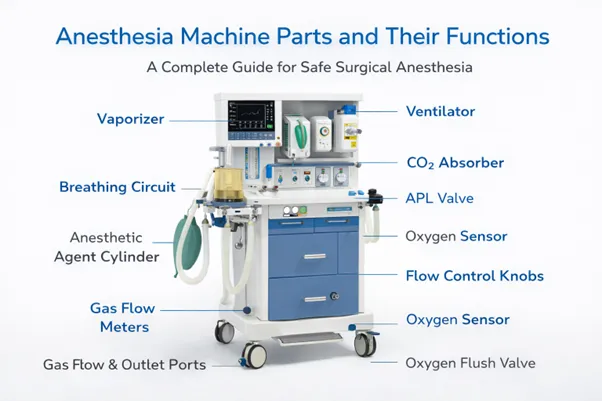
Anesthesia Machine: A Lifesaving Pillar in the Operating Room | Surgical procedures in hospitals always involve highly critical medical teamwork. Behind the comfort of a patient sleeping peacefully during surgery, there is an immense responsibility carried out by an Anesthesiologist or an Anesthesia Nurse. However, these medical professionals certainly do not work alone. They are accompanied by a sophisticated piece of medical technology that serves as a core pillar of patient safety: the anesthesia machine, frequently referred to simply as the gas machine.
This equipment is far from a mere accessory in the operating theater; it functions as a highly complex, medical life-support system. To fully appreciate its significance, it is essential to delve into its primary functions, core components, and operational mechanisms.
Primary Function of the Anesthesia Machine
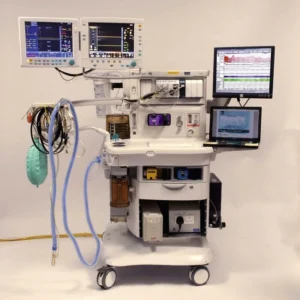
At its core, the anesthesia machine is engineered to exert full control over the respiratory system of an unconscious patient. Its fundamental role is to deliver or emit a precisely validated, safe mixture of medical and anesthetic gases into a dedicated breathing circuit.
Once introduced into the circuit, this gas mixture is inhaled by the patient to safely induce and maintain a state of unconsciousness and insensibility to pain throughout the surgical intervention. Beyond supplying anesthetic vapors and vital oxygen, the apparatus bears the equal responsibility of safely removing and scavenging the residual carbon dioxide-laden gas mixtures exhaled by the patient.
Essential Components and How They Work
Modern gas machines integrate intricate mechanical and electronic subsystems to ensure flawless dosing precision. Several indispensable components driving this system include:
-
Medical Gas Supply: Provides the primary life-sustaining and carrier gases, specifically Oxygen (), Nitrous Oxide (), and medical compressed air.
-
Flowmeters: These precision valves regulate and display the exact volumetric flow rate of each gas directed to the patient, measured carefully in liters per minute.
-
Vaporizers: This critical component safely transforms liquid anesthetic agents (such as isoflurane, sevoflurane, or desflurane) into a vaporous state, blending them into the fresh gas flow with extreme precision.
-
Breathing Circuit: The specialized tubing system that creates a direct pathway between the machine and the patient’s face mask or endotracheal tube.
-
Carbon Dioxide () Absorber System: A chemical canister filled with absorbent granules (typically soda lime) that filters out carbon dioxide from exhaled breath, preventing the patient from rebreathing toxic waste gases.
Safety Note: Modern anesthesia workstations are universally equipped with automated fail-safe and alarm systems. If oxygen supply pressures drop or a circuit leak occurs, the machine immediately triggers audible and visual alerts to notify the surgical team instantly.
Why Dosing Precision is Vital
Every individual possesses unique physiological responses, body weights, and pre-existing health profiles. Consequently, anesthetic gas delivery cannot tolerate any margin of error.
If the administered dose is insufficient, the patient risks experiencing intraoperative awareness—waking up mid-surgery. Conversely, an overdose can severely depress cardiovascular and respiratory functions, leading to life-threatening complications. This delicate balance highlights why the structural reliability and precise gas delivery of the workstation are paramount to helping anesthesia providers maintain stable patient vitals from incision to emergence.
The anesthesia machine stands as a silent hero within the operating theater. Through its capability to mix, deliver, and scavenge anesthetic gases with absolute precision, it guarantees that complex surgeries proceed smoothly with minimized risk. Within the medical landscape, this equipment is far more than a tool; it represents a lifeline ensuring that patients drift safely into sleep and awaken securely once their healing journey begins.
Best Home Blood Pressure Monitors for Accurate Readings
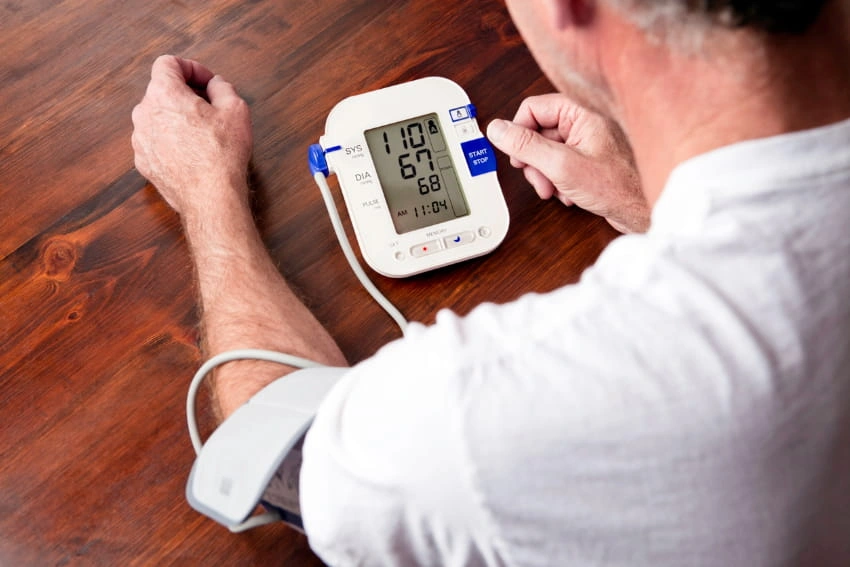
Best Home Blood Pressure Monitors for Accurate Readings | Monitoring heart health is no longer a task confined to clinics or hospitals. With significant advancements in medical technology, tracking your blood pressure independently has become a highly recommended preventive measure for people of all ages. One of the most essential instruments for every modern household today is the digital tensiometer. This device allows individuals to detect early signs of hypertension—often called the “silent killer”—without requiring professional medical expertise or frequent trips to the doctor.
Why Choose the Upper Arm Type Over Wrist Models?
When deciding to purchase a blood pressure monitor, you will inevitably encounter two primary types: wrist monitors and upper arm monitors. Although wrist models appear more compact and offer better portability for travelers, health experts and medical practitioners strongly suggest using the upper arm type for primary home use.
The reason for this preference is simple yet critical: accuracy. The anatomy of the upper arm allows the cuff to be positioned naturally at the same level as the heart. This alignment minimizes the risk of reading errors that often occur with wrist monitors, which are highly sensitive to even slight changes in body positioning or arm height. By obtaining more stable and consistent readings, the data you collect serves as a much more valid reference when you need to consult with a physician or adjust your daily lifestyle habits.
Evaluating Quality, Brand Reputation, and Pricing
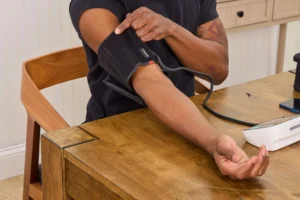
Investing in a health device requires a careful balance between quality, reliability, and cost. In the medical device industry, trusted brands like Omron have long been considered the gold standard due to their long-term durability and clinical precision. For home users, popular models such as the Omron HEM-7142 or the M2 Series are exceptionally practical choices that bridge the gap between professional performance and user-friendly design.
Generally, these high-quality devices are priced competitively between 37 to 70 USD. In many markets, this price range ensures that the device has undergone rigorous clinical validation and carries recognized medical certifications. While cheaper, generic alternatives might be tempting, investing in a reputable brand provides the peace of mind that the numbers you see on the screen are reflective of your actual health status rather than a technical glitch.
Advanced Features for Comprehensive User Convenience
Modern digital monitors do much more than just display systolic and diastolic numbers. To stay competitive and helpful, they often include several integrated features that help you monitor your cardiovascular condition more comprehensively:
-
Irregular Heartbeat Detection: This is a vital safety feature. The device alerts the user if the sensor detects an arrhythmia or any irregular heart rhythm during the measurement process, which could be an early warning sign of underlying issues.
-
Internal Memory Storage: Gone are the days of manually recording every result on a piece of paper that eventually gets lost. Most modern devices can store dozens or even hundreds of previous measurements, complete with dates and timestamps, allowing you to track trends over weeks or months.
-
Cuff Wrap Guide: One of the most common mistakes in home testing is improper cuff placement. This feature provides a clear visual signal (often a green light or icon) to confirm that the cuff is wrapped correctly and not too loose.
Expert Tips for Achieving the Most Accurate Results
To get the most out of your digital device and ensure your data is reliable, follow these medical best practices:
-
Rest and Calm Down: Sit quietly without distractions for at least 5 minutes before starting the test. Avoid smoking, caffeine, or heavy exercise for 30 minutes prior.
-
Maintain Correct Body Posture: Sit upright in a chair with your back well-supported and your feet flat on the floor. Do not cross your legs, as this can temporarily raise blood pressure.
-
Position Your Arm at Heart Level: Rest your arm on a flat surface like a table. The cuff on your upper arm should be at the same horizontal level as your heart.
-
Practice Consistency: Take two or three measurements with a 1-2 minute break in between. Calculate the average of these readings to get a more stable representation of your pressure.
A Small Investment for Long-Term Peace of Mind
Owning a digital blood pressure monitor at home is an act of proactive care for yourself and your loved ones. With a relatively affordable investment, you gain access to an accurate diagnostic tool like the Omron HEM-7142 that empowers you to take charge of your wellness. Monitoring your blood pressure regularly is not about being paranoid or feeling “sick”; rather, it is a conscious, modern effort to ensure your cardiovascular system functions optimally in the long run, helping you live a longer, healthier life.

Engineering Breath: A Deep Dive into Ventilator Hardware
Engineering Breath: A Deep Dive into Ventilator Hardware | In the high-stakes environment of an Intensive Care Unit (ICU), the ventilator stands as a masterpiece of biomedical engineering. Often oversimplified as a “breathing machine,” this device is actually a sophisticated computerized system that integrates fluid dynamics, high-speed sensors, and complex algorithms. Its primary job isn’t just to move air, but to manage the delicate physics of gas exchange when the human body can no longer do so.
The Pneumatic Core: Precision Gas Blending

At the heart of every modern ventilator lies a complex pneumatic system. Unlike a simple pump, a ventilator must mix medical-grade air and pure oxygen to a precise fraction—known as .
-
Proportional Valves: Using high-speed solenoid valves, the machine blends gases to deliver anywhere from 21% to 100% oxygen.
-
The Turbine or Piston: While older models relied on external wall air, many modern portable units use high-speed turbines that can ramp up RPMs in milliseconds to generate the necessary inspiratory flow.
The Patient Circuit: The Delivery Architecture
The interface between the machine and the patient is the breathing circuit. This isn’t just a plastic hose; it is a closed-loop system designed to maintain strict pressure environments.
-
Inspiratory and Expiratory Limbs: The dual-limb circuit ensures that the air going in is filtered and the air coming out (CO2) is managed without cross-contamination.
-
HME and Humidification: Cold, dry gas from a tank can damage lung tissue. Technical setups include either a heated humidifier or a Heat and Moisture Exchanger (HME)—often called an “artificial nose”—to ensure the gas reaching the lungs is at 37°C and 100% humidity.
Sensory Intelligence: Flow and Pressure Monitoring
What truly separates a ventilator from a “dumb” pump is its ability to “feel” the patient. Advanced sensors located at the “Y-piece” (where the tube meets the patient) monitor:
-
Flow Triggers: The machine detects a tiny drop in pressure or a slight change in airflow when a patient attempts to take a breath.
-
Pressure Transducers: These sensors measure the resistance of the lungs. If the machine detects that the pressure is getting too high (due to a blockage or lung stiffness), it instantly adjusts to prevent barotrauma (pressure-induced lung injury).
The Logic of PEEP: Maintaining Lung Volume
One of the most critical technical settings is PEEP (Positive End-Expiratory Pressure). Mechanically, this prevents the circuit pressure from dropping to zero at the end of a breath. By maintaining a baseline of positive pressure, the machine keeps the alveoli (microscopic air sacs) propped open. From a technical standpoint, managing PEEP is a balancing act: too little, and the lungs collapse; too much, and it can interfere with heart function by increasing intrathoracic pressure.
Fail-Safes and Hardware Alarms
Engineering a ventilator requires extreme redundancy. The alarm systems are categorized by priority:
-
High-Pressure Alarms: Triggered by mechanical obstructions, such as a kinked tube or a patient “fighting” the machine (asynchrony).
-
Low-Pressure/Disconnect Alarms: A critical safety feature that sounds if the system detects a leak, ensuring the circuit remains airtight and the patient is never left without support.
The modern ventilator is a triumph of medical technology. It bridges the gap between mechanical engineering and human physiology, using precise sensors and pneumatic valves to replicate the rhythm of life. For clinicians and technicians, understanding the “bones” of this machine is essential to ensuring that the technology serves its ultimate purpose: giving the patient the time and oxygen they need to recover.

Understanding IVD: The Vital Tech Behind Medical Diagnosis
Understanding IVD: The Vital Tech Behind Medical Diagnosis | When we go for a health check-up, a doctor often requests laboratory tests such as blood work, urine analysis, or a throat swab. While these procedures might feel like a routine part of a clinic visit, there is sophisticated technology working behind the scenes to provide definitive answers about our health. This field of technology is known in the medical world as In Vitro Diagnostics (IVD).
In simple terms, IVD refers to devices or systems used to examine biological samples taken from the human body. Unlike invasive procedures like surgery, these examinations are performed “outside the body”—derived from the Latin term in vitro, meaning “in glass.” The samples used can vary widely, ranging from blood and tissue to saliva or even DNA.
How IVD Guides Medical Treatment

The primary function of an IVD device is to provide objective data for healthcare professionals. Accurate diagnosis is the bedrock of effective treatment. Without the data provided by IVD results, clinicians would often have to rely on guesswork based solely on visible physical symptoms.
For instance, if a patient feels fatigued and appears pale, a Complete Blood Count (CBC)—a common type of IVD—can pinpoint exactly whether the patient is suffering from anemia, a specific infection, or other underlying health issues. With precise data in hand, the risk of misdiagnosis or improper medication is significantly reduced.
Diverse Types and Scales of Use
The spectrum of diagnostic devices is vast, spanning from tools we can use at home to massive automated machines in central laboratories. Here are the primary categories:
-
Self-Testing Tools (Point-of-Care): Perhaps the most familiar example is the home pregnancy test. This is one of the simplest yet most crucial forms of IVD. Additionally, during the pandemic, rapid antigen tests for COVID-19 became a household staple. The ability of these tools to provide instant results without a hospital visit is their greatest advantage.
-
Public Safety Screening: IVDs play a vital role in safeguarding the national blood supply. Every bag of donated blood must undergo high-speed testing in clinical laboratories to ensure the absence of infectious diseases such as HIV or Hepatitis. In this context, IVD acts as the first line of defense for public health.
-
Complex Disease and Genetic Diagnosis: At a more advanced level, IVDs are used for genetic analysis. These tests can detect specific gene mutations that may increase the risk of cancer. By understanding a patient’s genetic profile, doctors can design “personalized medicine,” where treatments are tailored specifically to the patient’s unique biological makeup.
Why IVD is Essential for the Future of Healthcare
The integration of digital technology is making IVDs more efficient than ever. Today, many diagnostic devices are being equipped with Artificial Intelligence (AI) to interpret lab results with a level of precision that can exceed human observation. This speeds up data processing, ensuring patients no longer have to wait days for critical results.
Furthermore, easier access to IVD encourages a more proactive approach to early detection. It is well-known that most serious illnesses have a much higher recovery rate if caught in the early stages through routine screening. IVD is shifting the healthcare paradigm from “reacting to illness” to “monitoring for wellness.”
In vitro diagnostic medical devices are far more than just lab equipment. They serve as the “eyes” for medical practitioners, allowing us to see what is happening within cells and blood vessels without the need for surgery. From confirming a pregnancy in the morning to screening for infections in large-scale labs, IVDs work quietly to ensure every medical decision is based on valid, actionable data.
Understanding the significance of these tools helps us appreciate the rapid advancements in medical technology. With fast and accurate diagnostics, the path to recovery becomes shorter and more certain.