Anesthesia Machine: A Lifesaving Pillar in the Operating Room
Anesthesia Machine: A Lifesaving Pillar in the Operating Room | Surgical procedures in hospitals always involve highly critical medical teamwork. Behind the comfort of a patient sleeping peacefully during surgery, there is an immense responsibility carried out by an Anesthesiologist or an Anesthesia Nurse. However, these medical professionals certainly do not work alone. They are accompanied by a sophisticated piece of medical technology that serves as a core pillar of patient safety: the anesthesia machine, frequently referred to simply as the gas machine.
This equipment is far from a mere accessory in the operating theater; it functions as a highly complex, medical life-support system. To fully appreciate its significance, it is essential to delve into its primary functions, core components, and operational mechanisms.
Primary Function of the Anesthesia Machine
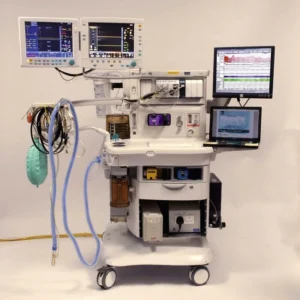
At its core, the anesthesia machine is engineered to exert full control over the respiratory system of an unconscious patient. Its fundamental role is to deliver or emit a precisely validated, safe mixture of medical and anesthetic gases into a dedicated breathing circuit.
Once introduced into the circuit, this gas mixture is inhaled by the patient to safely induce and maintain a state of unconsciousness and insensibility to pain throughout the surgical intervention. Beyond supplying anesthetic vapors and vital oxygen, the apparatus bears the equal responsibility of safely removing and scavenging the residual carbon dioxide-laden gas mixtures exhaled by the patient.
Essential Components and How They Work
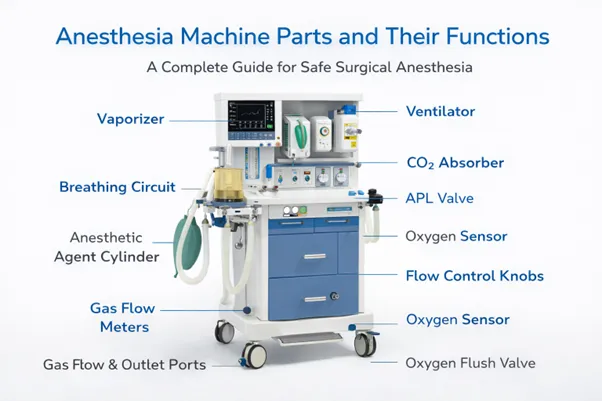
Modern gas machines integrate intricate mechanical and electronic subsystems to ensure flawless dosing precision. Several indispensable components driving this system include:
-
Medical Gas Supply: Provides the primary life-sustaining and carrier gases, specifically Oxygen (), Nitrous Oxide (), and medical compressed air.
-
Flowmeters: These precision valves regulate and display the exact volumetric flow rate of each gas directed to the patient, measured carefully in liters per minute.
-
Vaporizers: This critical component safely transforms liquid anesthetic agents (such as isoflurane, sevoflurane, or desflurane) into a vaporous state, blending them into the fresh gas flow with extreme precision.
-
Breathing Circuit: The specialized tubing system that creates a direct pathway between the machine and the patient’s face mask or endotracheal tube.
-
Carbon Dioxide () Absorber System: A chemical canister filled with absorbent granules (typically soda lime) that filters out carbon dioxide from exhaled breath, preventing the patient from rebreathing toxic waste gases.
Safety Note: Modern anesthesia workstations are universally equipped with automated fail-safe and alarm systems. If oxygen supply pressures drop or a circuit leak occurs, the machine immediately triggers audible and visual alerts to notify the surgical team instantly.
Why Dosing Precision is Vital
Every individual possesses unique physiological responses, body weights, and pre-existing health profiles. Consequently, anesthetic gas delivery cannot tolerate any margin of error.
If the administered dose is insufficient, the patient risks experiencing intraoperative awareness—waking up mid-surgery. Conversely, an overdose can severely depress cardiovascular and respiratory functions, leading to life-threatening complications. This delicate balance highlights why the structural reliability and precise gas delivery of the workstation are paramount to helping anesthesia providers maintain stable patient vitals from incision to emergence.
The anesthesia machine stands as a silent hero within the operating theater. Through its capability to mix, deliver, and scavenge anesthetic gases with absolute precision, it guarantees that complex surgeries proceed smoothly with minimized risk. Within the medical landscape, this equipment is far more than a tool; it represents a lifeline ensuring that patients drift safely into sleep and awaken securely once their healing journey begins.