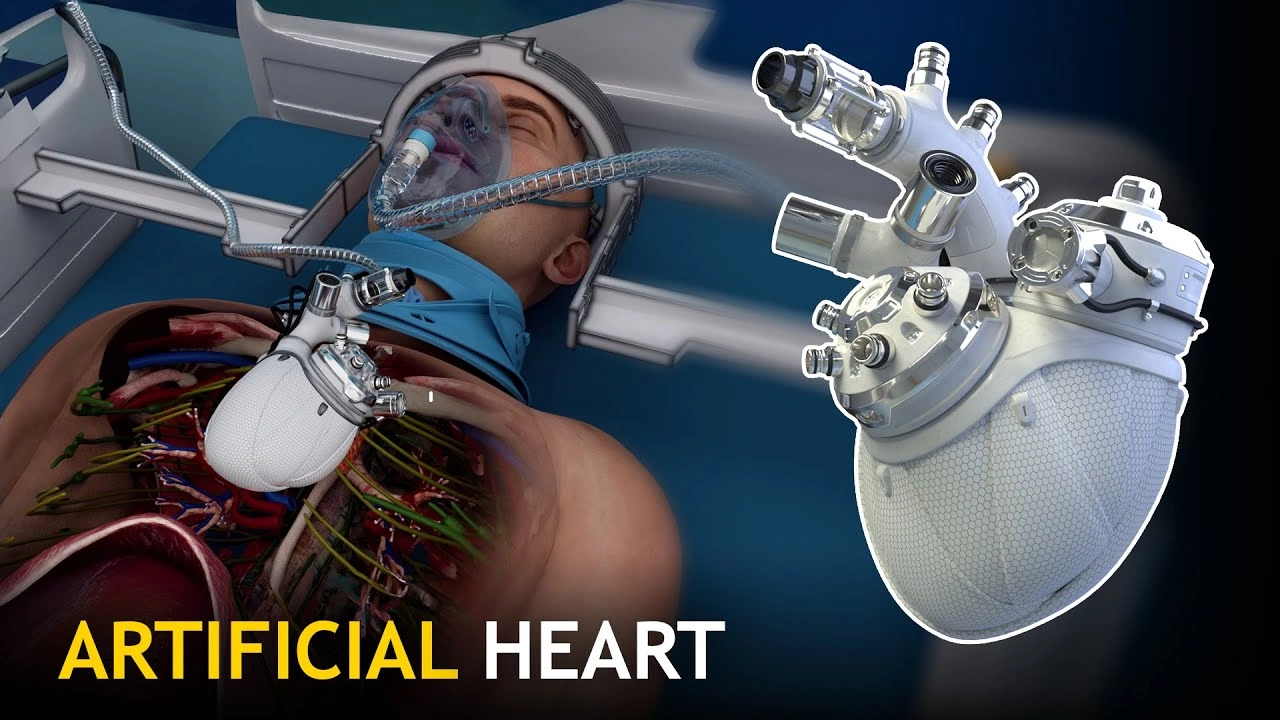
Artificial Heart: A Life-Saving Innovation in Modern Medicine – Medical marvels continue to advance rapidly, offering newfound hope for those facing critical health conditions. One of the most significant breakthroughs in cardiology is the development of the artificial heart. This device is far more than just an electronic gadget; it is a complex mechanical system designed to take over the vital role of the hardest-working organ in our body.
What Exactly is an Artificial Heart?
In simple terms, an artificial heart is a mechanical pump surgically installed to replace the function of the heart’s ventricles. In a healthy body, these two lower chambers are responsible for pumping blood to the lungs and throughout the entire system. When end-stage heart failure occurs and these chambers can no longer perform their duties, an artificial heart serves as a crucial medical intervention.
The installation of a Total Artificial Heart (TAH) involves the complete replacement of both lower chambers. The device is then connected directly to the upper chambers of the heart (the atria) and the main arteries. Through this connection, blood circulation that was previously obstructed can flow freely again, ensuring every tissue in the body receives an adequate oxygen supply.
A Vital Role as a “Bridge” to Life
It is essential to understand that, currently, an artificial heart is primarily used as a temporary solution. In the medical field, this is often referred to as a “Bridge to Transplant.” There are several reasons why this approach is taken:
-
Waiting for a Donor: Finding a compatible human heart donor is a lengthy process due to the limited number of available matches.
-
Maintaining Patient Stability: Patients with severe heart failure are often too weak to survive a long wait. The artificial heart maintains their health, ensuring they are strong enough when a donor heart finally becomes available.
-
Organ Recovery: By restoring healthy circulation, other organs—such as the kidneys and liver—that may have been struggling can recover before the major transplant surgery takes place.
How Does it Function?
While it may seem highly technical, the principle behind an artificial heart mimics the natural action of heart muscles. The device utilizes an external power source and a control system to regulate the pumping rhythm. Blood entering the atria is channeled into the mechanical sacs of the artificial heart and then pumped out with calibrated force to keep the patient’s blood pressure stable.
While using this device, patients are typically connected to an external driver (console) that monitors blood flow in real-time. Although this imposes certain physical limitations, the latest technology has allowed for more compact control units, enabling patients to maintain a degree of mobility within a hospital or home setting.
New Hope for Heart Failure Patients

Heart failure often leaves sufferers with severe shortness of breath, chronic fatigue, and swelling throughout the body. Intervening with an artificial heart can alleviate these heavy symptoms almost instantly once normal circulation is restored.
This technological leap proves that the line between biology and mechanical engineering is blurring for the sake of extending human life. For many families, the existence of the artificial heart is not just about surgical success rates—it is about gaining precious extra time with their loved ones.
The artificial heart stands as a milestone in modern medicine, providing a second chance for patients with permanent heart damage. As a temporary replacement for failed ventricles, this device ensures that life keeps beating while waiting for a permanent donor heart. Raising awareness about this technology is vital so that society understands that heart failure is no longer a definitive end, but a challenge that can be bridged with extraordinary innovation.
Medical Disclaimer: The decision to use an artificial heart is always based on a deep evaluation by a team of cardiac specialists. If you or a relative have concerns regarding heart function, consult a medical expert immediately for an accurate diagnosis.