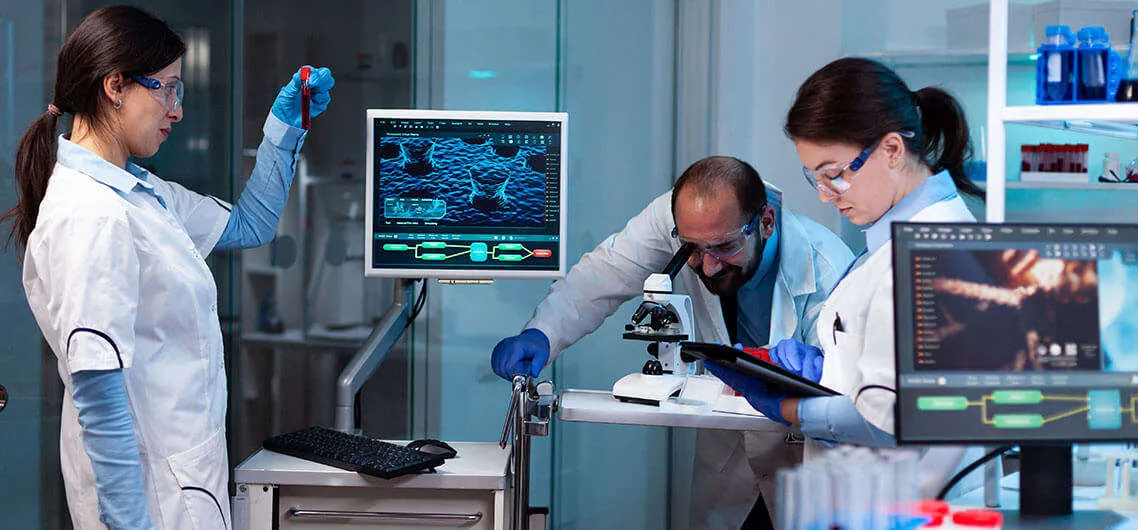
Understanding IVD: The Vital Tech Behind Medical Diagnosis | When we go for a health check-up, a doctor often requests laboratory tests such as blood work, urine analysis, or a throat swab. While these procedures might feel like a routine part of a clinic visit, there is sophisticated technology working behind the scenes to provide definitive answers about our health. This field of technology is known in the medical world as In Vitro Diagnostics (IVD).
In simple terms, IVD refers to devices or systems used to examine biological samples taken from the human body. Unlike invasive procedures like surgery, these examinations are performed “outside the body”—derived from the Latin term in vitro, meaning “in glass.” The samples used can vary widely, ranging from blood and tissue to saliva or even DNA.
How IVD Guides Medical Treatment
The primary function of an IVD device is to provide objective data for healthcare professionals. Accurate diagnosis is the bedrock of effective treatment. Without the data provided by IVD results, clinicians would often have to rely on guesswork based solely on visible physical symptoms.
For instance, if a patient feels fatigued and appears pale, a Complete Blood Count (CBC)—a common type of IVD—can pinpoint exactly whether the patient is suffering from anemia, a specific infection, or other underlying health issues. With precise data in hand, the risk of misdiagnosis or improper medication is significantly reduced.
Diverse Types and Scales of Use
The spectrum of diagnostic devices is vast, spanning from tools we can use at home to massive automated machines in central laboratories. Here are the primary categories:
-
Self-Testing Tools (Point-of-Care): Perhaps the most familiar example is the home pregnancy test. This is one of the simplest yet most crucial forms of IVD. Additionally, during the pandemic, rapid antigen tests for COVID-19 became a household staple. The ability of these tools to provide instant results without a hospital visit is their greatest advantage.
-
Public Safety Screening: IVDs play a vital role in safeguarding the national blood supply. Every bag of donated blood must undergo high-speed testing in clinical laboratories to ensure the absence of infectious diseases such as HIV or Hepatitis. In this context, IVD acts as the first line of defense for public health.
-
Complex Disease and Genetic Diagnosis: At a more advanced level, IVDs are used for genetic analysis. These tests can detect specific gene mutations that may increase the risk of cancer. By understanding a patient’s genetic profile, doctors can design “personalized medicine,” where treatments are tailored specifically to the patient’s unique biological makeup.
Why IVD is Essential for the Future of Healthcare
The integration of digital technology is making IVDs more efficient than ever. Today, many diagnostic devices are being equipped with Artificial Intelligence (AI) to interpret lab results with a level of precision that can exceed human observation. This speeds up data processing, ensuring patients no longer have to wait days for critical results.
Furthermore, easier access to IVD encourages a more proactive approach to early detection. It is well-known that most serious illnesses have a much higher recovery rate if caught in the early stages through routine screening. IVD is shifting the healthcare paradigm from “reacting to illness” to “monitoring for wellness.”
In vitro diagnostic medical devices are far more than just lab equipment. They serve as the “eyes” for medical practitioners, allowing us to see what is happening within cells and blood vessels without the need for surgery. From confirming a pregnancy in the morning to screening for infections in large-scale labs, IVDs work quietly to ensure every medical decision is based on valid, actionable data.
Understanding the significance of these tools helps us appreciate the rapid advancements in medical technology. With fast and accurate diagnostics, the path to recovery becomes shorter and more certain.