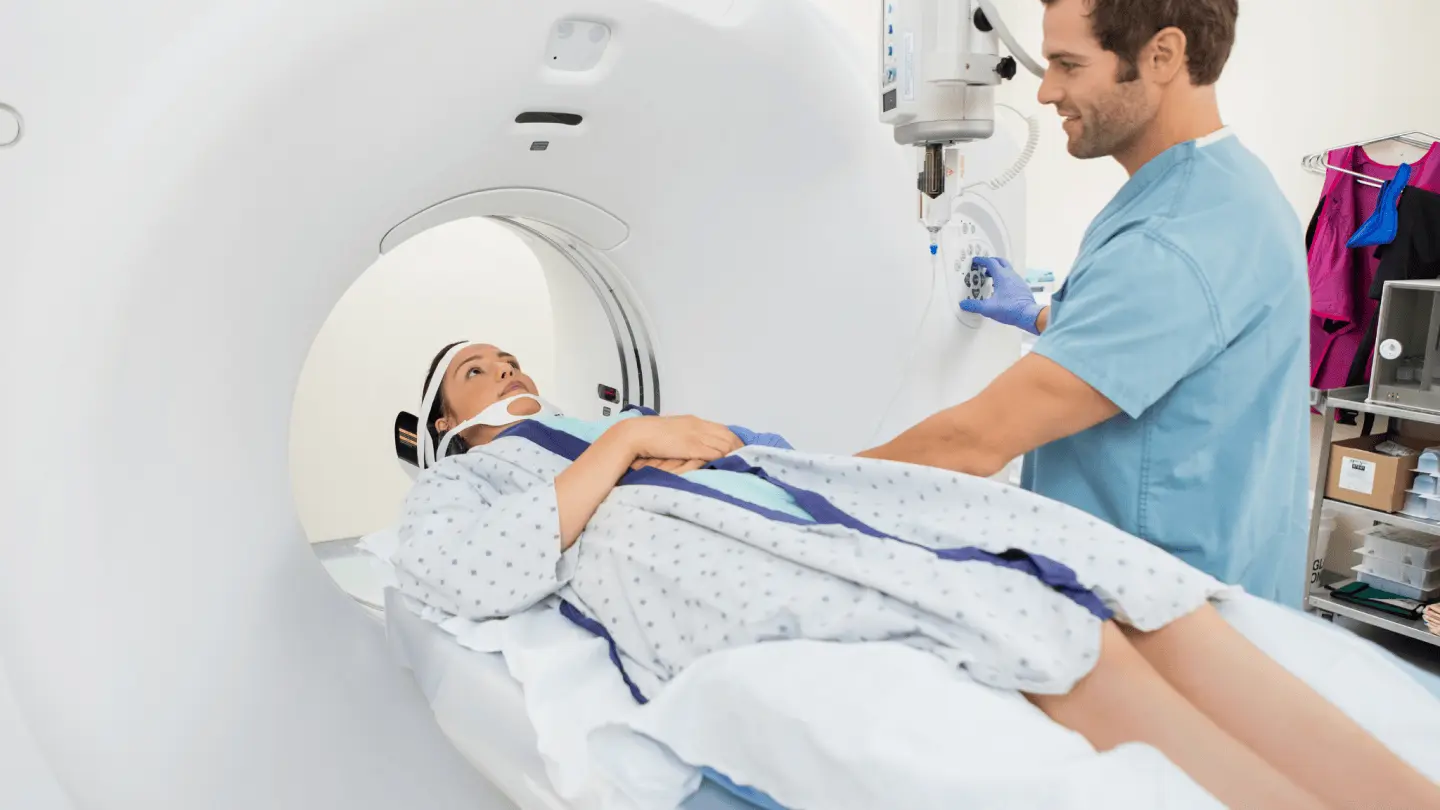
CT Scan vs MRI: Which One Should Hospitals Prioritize? | In hospital operations, the radiology department serves as the core of diagnostics, determining the accuracy of subsequent medical interventions. Among the advanced devices available, Computed Tomography (CT) Scans and Magnetic Resonance Imaging (MRI) are the two primary instruments clinicians rely on most. While both are designed to non-invasively produce cross-sectional images of the human body, their working principles, technological components, and clinical applications are completely different.
For hospital management, specialists, and biomedical technicians, a deep understanding of this comparative analysis goes beyond basic functionality. It impacts Emergency Room (ER) workflow efficiency, operational cost optimization, and, most importantly, patient safety and diagnostic precision.
Fundamental Tech Principles: Digital X-Rays vs. Magnetic Fields
To understand why these two devices serve different purposes, we must analyze the hardware technology embedded within them.
Mechanism of a CT Scan
A CT scan is essentially an advanced evolution of conventional X-ray technology. This device utilizes a motorized rotating X-ray tube inside the gantry (the machine’s tunnel) to encircle the patient’s body. As the tube rotates, detectors capture the X-ray beams that penetrate the body tissues from various angles. This raw data is then processed by a computer using advanced mathematical reconstruction algorithms to produce highly detailed two-dimensional or three-dimensional images of dense anatomical structures.
Mechanism of an MRI
In stark contrast to its counterpart, an MRI does not utilize ionizing radiation. Instead, the machine relies on a high-strength superconducting magnetic field—typically measured in Tesla, such as 1.5T or 3.0T—along with radiofrequency waves.
When a patient enters the MRI bore, the hydrogen atoms within the water molecules of the patient’s body align with the magnetic field. When radiofrequency waves are emitted, this atomic alignment is temporarily disrupted. Once the radio waves are turned off, the atoms return to their original positions while emitting a return radio signal captured by specialized coils. This signal is what the computer converts into images with exceptionally high soft-tissue contrast.
Clinical Emergencies: Why CT Scans Lead the Way in the ER
Time is the most valuable element in the emergency room. When a patient presents with severe trauma or a sudden loss of consciousness, every wasted second can lead to fatal outcomes. In these critical scenarios, CT scan technology demonstrates its absolute dominance.
1. Rapid Evaluation of Trauma and Internal Bleeding
The primary advantage of a CT scan is its imaging speed. The scanning process for the entire body or a specific organ takes only seconds to a few minutes. This characteristic makes it the perfect first-line screening tool to detect internal organ injuries, vascular tears, or internal bleeding from accidents.
2. Acute Stroke Diagnosis
In stroke management, physicians must instantly determine whether symptoms are caused by a blood vessel blockage (ischemic stroke) or a ruptured blood vessel (hemorrhagic stroke). A head CT scan can display blood patches from hemorrhages quickly and clearly, allowing medical teams to make immediate decisions regarding thrombolytic therapy or emergency neurosurgery.
3. Mapping Complex Bone Fractures
While bones can be viewed with standard X-rays, intricate bone structures—such as those in the face, pelvis, or joints experiencing crushed fractures—require the three-dimensional detail provided by a CT scan. The device can visualize the smallest fissures and bone fragment displacements precisely to guide orthopedic surgeons.
4. Chest and Abdomen Examination
CT scans are highly effective for evaluating pathologies within the thoracic and abdominal cavities. Acute disorders such as pulmonary embolism (arterial blockage in the lungs), gastric perforation, ruptured appendix, and bowel obstructions can be identified with high accuracy using iodine-based contrast dyes injected into the bloodstream.
Unmatched Soft Tissue Detail: When Do Clinicians Choose MRI?
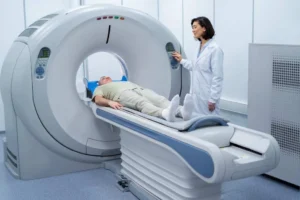
While CT scans excel in speed and dense structure visualization, MRI remains the gold standard when physicians require super-detailed imaging of soft, fluid-rich, and hidden components of the body shielded by bone.
1. Diagnosing Complex Neurological Conditions
The brain and spinal cord are highly intricate structures protected by the thick cranium and spinal column. MRI possesses the superior ability to penetrate this bony protection without distortion, sharply distinguishing between healthy and abnormal tissue. Degenerative diseases like multiple sclerosis, micro-sized brain tumors, ultra-early-stage strokes, and spinal cord nerve disorders can only be mapped in detail through MRI scanning.
2. Joint, Muscle, and Ligament Injuries
For athletes or patients suffering from severe sports injuries, an MRI is an indispensable diagnostic tool. The device can reveal ligament tears (such as an ACL tear in the knee), cartilage damage (meniscus), tendon tears, and muscle contusions that would not show up clearly on a standard CT scan or X-ray.
3. Detailed Organ and Pelvic Imaging
MRI provides exceptional visual contrast for evaluating specific internal organs, such as detecting focal lesions in the liver, evaluating cardiac structures, and mapping reproductive organs deep within the pelvic cavity. This significantly assists oncologists in determining accurate cancer staging before surgical interventions.
Technical Considerations and Operational Limitations
Choosing the right device also involves analyzing physical machine limitations, patient comorbidities, and radiation safety aspects.
Risk Factors and Limitations of CT Scans
-
Radiation Exposure: CT scans use ionizing radiation. Although modern medical technology has minimized doses to safe levels, this examination is generally avoided for pregnant patients unless in life-threatening situations. Repeated use on children must also be carefully weighed.
-
Contrast Dye Sensitivity: To enhance vascular structures, CT scans often require an injection of iodine-based contrast media. This agent can trigger allergic reactions in some patients and poses a risk of side effects for individuals with compromised kidney function.
Risk Factors and Limitations of MRIs
-
Duration and Patient Cooperation: An MRI scan takes a significant amount of time, ranging from 20 to 90 minutes depending on the complexity of the targeted area. During this window, patients must remain completely still inside a narrow tunnel. This environment frequently triggers intense anxiety in patients suffering from claustrophobia. Additionally, the loud tapping noises generated by the magnetic coils during operation require patients to wear hearing protection.
-
Metal Hazards and Implantable Devices: Because it uses a powerful magnetic field, the MRI room must remain free of ferromagnetic materials. External metallic objects can be pulled toward the machine at high speeds, posing a severe hazard. For patients with internal medical implants—such as older pacemakers, brain aneurysm clips, or cochlear implants—conventional MRI scans can be highly dangerous, as the magnetic field can displace the implant or disrupt electronic circuitry.
Clinical Decision-Making Guide for Hospitals
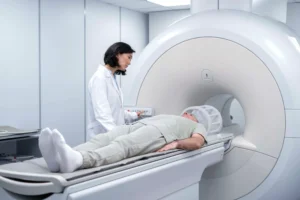
To streamline the patient triaging process in radiology departments, the choice of equipment can be summarized based on the following clinical parameters:
-
Choose a CT Scan if: The patient’s condition is an emergency (trauma, accident, suspected acute stroke), the target of the examination is bone structure or the lungs, the patient cannot remain still for long periods (e.g., pediatric or agitated patients), and time efficiency is the top priority.
-
Choose an MRI if: The case is non-emergent but requires specific diagnostics in soft tissues, the examination involves the central nervous system (brain and spine), early tumor detection is needed, chronic ligament injuries are being evaluated, and when the patient must avoid radiation exposure entirely.
By placing patients in the correct imaging modality from the start, hospitals not only save patients from unnecessary diagnostic expenses but also maximize medical equipment utilization according to its best capacity—ensuring excellent, safe, and premium healthcare delivery.