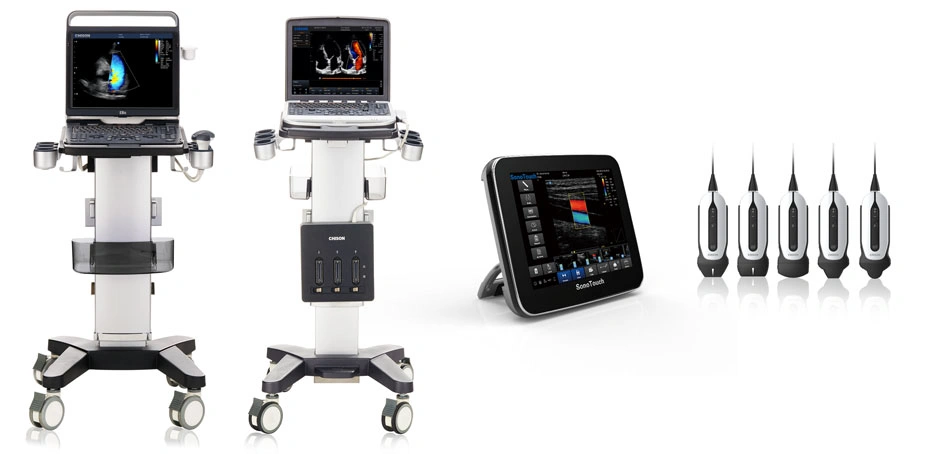
Portable Ultrasound: Fast & Precise Diagnostics | Over the last few decades, the face of healthcare has undergone a significant shift. One of the most impactful technological leaps is the evolution of medical imaging devices. While ultrasound (USG) examinations used to require patients to visit specialized radiology rooms equipped with massive machines, the scenario has now changed. The emergence of portable ultrasound machines has broken down the hospital walls, bringing diagnostic capabilities directly to the patient’s bedside.
What is a Portable Ultrasound Machine?
Put simply, a portable ultrasound is an imaging system designed with mobility in mind without compromising image quality. These devices no longer rely on complex wiring or heavy stationary units. In the field, they come in various forms, ranging from compact trolley models that are easy to move between rooms, to sleek tablets, and even handheld devices that fit inside a doctor’s lab coat pocket.
This technology operates on the same principles as conventional ultrasound—using high-frequency sound waves to produce real-time images of internal organs. The difference lies in its flexibility; these tools are ready for use in cramped spaces, ambulances, or even emergency tents at disaster sites.
A Catalyst for Change on the Frontlines
The rising popularity of these mobile devices did not happen by chance. The COVID-19 pandemic served as a crucial turning point that accelerated the adoption of this technology. At that time, the need for diagnostic tools that were fast, accurate, and easy to sterilize became a top priority. Portable ultrasound allowed doctors to check the lung conditions of critical patients without having to move them to a radiology suite, which simultaneously minimized the risk of virus transmission.
Over time, these benefits expanded across various departments. Emergency Departments (ED) and Intensive Care Units (ICU) were at the forefront of experiencing the efficiency of these tools. In critical situations where every second counts, clinicians can immediately perform triage and determine medical actions within minutes of a patient’s arrival.
Breaking Through Medical Specialties
The ability to move between departments has made portable ultrasound a “modern stethoscope” for many specialists. Its use is no longer limited to monitoring pregnancies in OB/GYN clinics; it has branched out into various other fields:
-
Cardiology & Vascular: Instantly monitoring blood flow and heart conditions.
-
Endocrinology: Facilitating precise ultrasound-guided thyroid biopsies.
-
Pediatrics: Providing a less intimidating examination experience for children since the equipment is smaller and procedures can be done at their bedside.
-
Musculoskeletal: Helping orthopedic doctors visualize soft tissue or joint damage directly during a physical exam.
Integration of Artificial Intelligence (AI)
What makes today’s portable ultrasound machines stand out is the integration of Artificial Intelligence (AI). This innovation significantly assists doctors by simplifying workflows that are usually complex.
AI within ultrasound systems can help automate measurements, automatically enhance image clarity, and provide guidance for operators to achieve the correct viewing angle. As a result, diagnoses become more accurate, physician confidence increases, and examination times become much more efficient.
Compact Convenience: Changing the Paradigm
For half a century, we were accustomed to seeing medical technology as something static and rigid. However, current trends show that the future of medicine is about mobility and accessibility. Portable ultrasound machines provide healthcare professionals the freedom to deliver patient-centered care.
The ability to perform real-time imaging exactly where the patient is—whether in a remote clinic, at a patient’s home during home care visits, or in the middle of a crowded emergency room—has transformed how we perceive the effectiveness of healthcare services.
A portable ultrasound machine is not just a miniaturized piece of medical equipment. It represents a paradigm shift toward healthcare that is faster, closer, and smarter. Supported by AI technology and increasingly ergonomic designs, these devices will continue to be a vital pillar in helping medical professionals save more lives through earlier and more precise diagnosis.