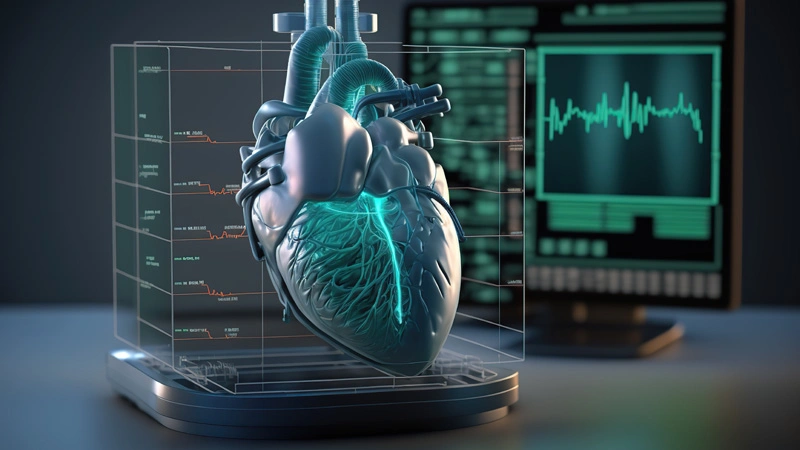
AI-ECG Wearables: Real-Time Cardiac Monitoring Trends
AI-ECG Wearables: Real-Time Cardiac Monitoring Trends – The Electrocardiogram (ECG) has been the cornerstone of cardiac diagnostics for over a century. However, in this digital era of 2026, this conventional tool is undergoing a profound “rebirth” driven by Artificial Intelligence (AI). The synergy between machine learning and ECG is not merely a software update; it represents a transformative shift in how clinicians interpret the human heartbeat.
Integrating AI into ECG interpretation allows for the detection of subtle electrical patterns that are often invisible to the human eye. While traditional ECGs were primarily used to assess a patient’s current cardiac state, AI-enhanced technology is pushing the boundaries into highly accurate predictive analytics.

Beyond Human Vision: The Edge of AI-ECG
The most compelling breakthrough in AI-enhanced ECG technology lies in its ability to identify structural heart diseases through electrical signals that appear perfectly normal to even the most seasoned cardiologists. Sophisticated algorithms, trained on millions of patient data points, can recognize minute anomalies that serve as early indicators of heart failure or valvular disorders.
Key pillars of this modern renaissance include:
-
Enhanced Diagnostic Accuracy: AI processes data objectively, significantly reducing the risk of interpretive errors caused by human fatigue or subjective bias.
-
Predictive Cardiovascular Events: This technology can now forecast the risk of future Atrial Fibrillation (AFib) or strokes, often before any clinical symptoms manifest in the patient.
-
Continuous Monitoring via Wearables: Thanks to AI, ECG features on smartwatches now possess serious clinical capabilities. Monitoring is no longer confined to hospital walls; it occurs in real-time, 24/7, during a patient’s daily activities.
The Challenges Behind the Algorithm
Despite the massive potential of AI-ECG, its journey toward mass implementation in global healthcare still faces significant hurdles. Medical technology is not just about digital prowess; it is deeply rooted in ethics and trust.
A primary challenge for health-tech developers today is the quality of training data. An AI algorithm is only as accurate as the data it consumes. If the datasets used are not diverse—spanning various ethnicities, ages, and genders—biases may emerge that could jeopardize patient safety.
Furthermore, legal accountability and explainability remain under the spotlight. Clinicians need to understand why an AI arrived at a specific diagnosis. Without a logical “paper trail” for the decision, it is difficult for medical professionals to rely entirely on a machine’s output. There are also valid concerns regarding the potential “de-skilling” of doctors if they become overly reliant on automation.
Shaping the Future of Cardiovascular Management
The presence of AI in the world of ECG is intended to serve as an intelligent assistant that augments the doctor’s role, not replaces it. With higher precision, patient care can become truly personalized. Each individual receives treatment tailored to a unique risk profile decoded from their specific ECG data.
In the coming years, we will witness a healthcare ecosystem where heart disease diagnosis is no longer reactive (treating after the fact) but proactive. Early detection fueled by AI-ECG will slash global healthcare costs and, most importantly, save countless lives through timely intervention.
The modern resurgence of the ECG through AI is proof that classic technology can remain relevant if it adapts. By prioritizing ethical standards, rigorous clinical validation, and robust patient data protection, the integration of AI-ECG will become the new gold standard in cardiovascular medicine. The ultimate focus remains unchanged: safeguarding the human heart with sharper intelligence and broader reach.