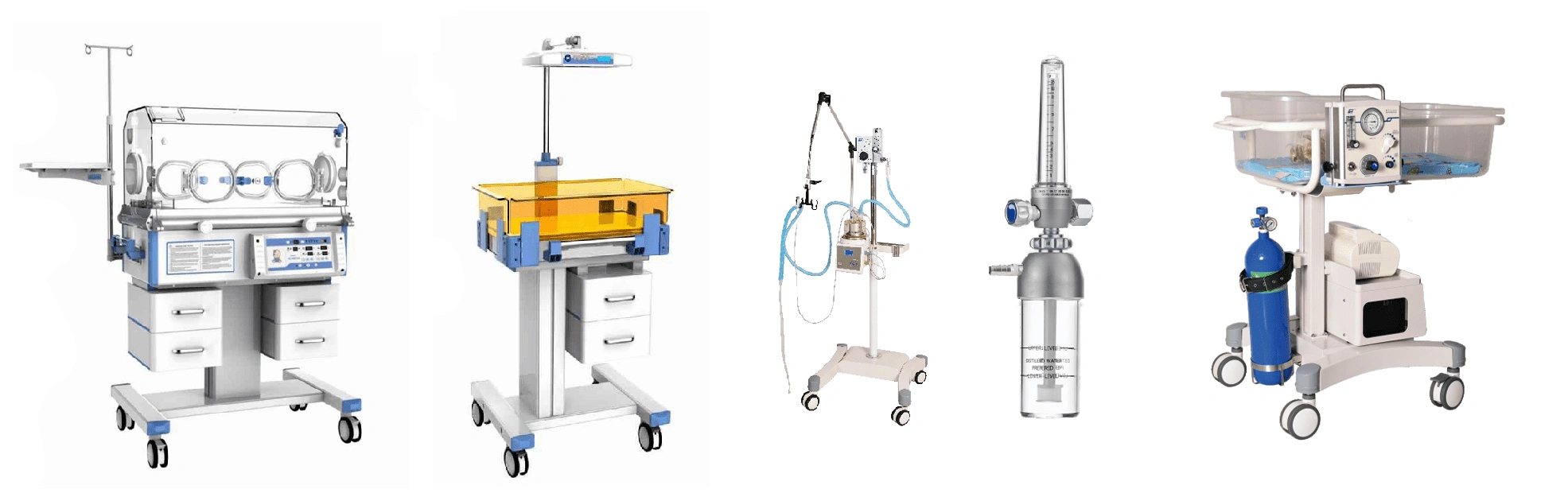
Essential NICU Equipment for Neonatal Care | The birth of a child is naturally a moment filled with profound joy. However, for some parents, this experience can quickly shift into a phase of intense anxiety when their newborn arrives prematurely or faces critical health complications. These vulnerable infants require highly specific, intensive medical intervention within the Neonatal Intensive Care Unit (NICU).
The NICU is far from an ordinary hospital ward. This specialized environment is meticulously designed to function as an artificial ecosystem, replicating the protective role of a mother’s womb. Inside this unit, every second counts, and every breath an infant takes is sustained by an array of high-tech medical devices. Working in perfect harmony, these instruments provide precise temperature regulation, accurate respiratory support, and continuous vital sign monitoring.
For healthcare professionals, clinical facility managers, and anyone seeking to understand how medical technology preserves the lives of these fragile newborns, let us explore the essential categories of medical equipment that form the backbone of neonatal care.
Thermal Regulation Systems: The Shield Against Hypothermia
Premature and low-birth-weight (LBW) infants lack the natural ability to regulate their own body temperature. Without adequate subcutaneous fat layers, they are highly susceptible to cold stress—a dangerous condition that can trigger metabolic complications and organ failure. Consequently, thermal regulation devices serve as the first line of defense in the NICU.
Infant Incubators
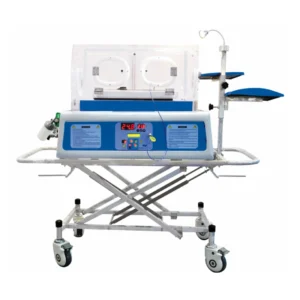
Incubators serve as the primary sanctuary for premature infants. These enclosed, transparent rigid boxes are engineered to maintain a sterile, warm microenvironment with strictly controlled humidity levels. High humidity is critical to prevent trans-epidermal water loss through the infant’s exceptionally thin skin. Furthermore, the incubator’s walls act as a protective barrier against airborne bacterial infections while dampening external hospital noise and harsh light.
Radiant Warmers
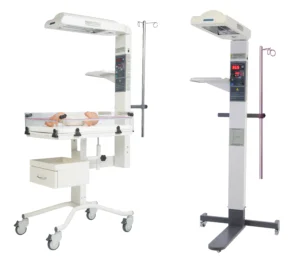
Unlike closed incubators, a radiant warmer is an open-bed system equipped with an overhead infrared heating element. This apparatus is typically utilized in delivery rooms immediately following birth, during emergency resuscitation, or whenever clinicians require rapid, unhindered physical access to the infant for medical procedures. Because the bed remains open, medical staff can move freely without being restricted by canopy walls, while ensuring the baby receives a constant, stabilizing flow of overhead heat.
Servo Heaters
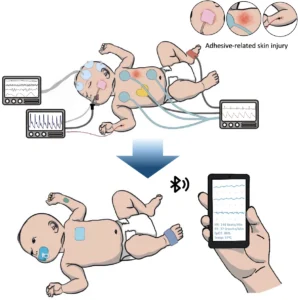
Safety in temperature management is further elevated through the integration of servo-control technology. These smart heating systems connect directly to a sensitive skin temperature probe attached to the infant’s abdomen. The mechanism operates automatically: if the probe detects a drop in the infant’s body temperature, the heating unit increases its output. Conversely, once the optimal body temperature is reached, the heater scales back. This continuous feedback loop eliminates the risk of overheating, which is equally hazardous to a newborn’s safety.
Respiratory Support Devices: Delivering the Breath of Life
The lungs are among the very last organs to mature fully during fetal development. As a result, many neonatal patients suffer from respiratory distress syndrome due to a lack of surfactant—the natural substance that keeps the lung’s air sacs open. To overcome this physiological limitation, the NICU relies on a spectrum of respiratory support machinery, ranging from invasive to non-invasive methods.
Mechanical Ventilators
When a newborn is entirely unable to breathe independently or suffers from severe respiratory failure, a mechanical ventilator becomes the most critical life-sustaining tool. This device operates invasively by delivering warmed, humidified air and oxygen directly into the lungs via an endotracheal tube placed down the infant’s windpipe. Modern neonatal ventilators possess an extraordinary level of precision, capable of delivering minute volumes of air at incredibly gentle pressures to prevent barotrauma to fragile lung tissues.
CPAP (Continuous Positive Airway Pressure) Machines
As a safer, non-invasive alternative for mild to moderate respiratory distress, CPAP machines are frequently the preferred choice. The device delivers a continuous stream of pressurized air and oxygen through small prongs placed inside the infant’s nostrils. This constant positive pressure keeps the alveoli (air sacs) inflated even when the infant exhales, preventing lung collapse and significantly reducing the energy the baby needs to expend for subsequent breaths.
High-Flow Nasal Cannula (HFNC) & Bedside Suction Units
HFNC technology is utilized to deliver heated and humidified oxygen-air blends at higher flow rates than standard cannulas, offering greater comfort for infants transitioning away from heavy mechanical ventilation toward independent breathing. This setup is always paired with a bedside suction unit. Suction devices are vital for clearing mucus, amniotic fluid, or secretions that obstruct the infant’s airway, ensuring a clear path for oxygen without delay.
Monitoring and Therapeutics: Continuous Vigilance and Precise Interventions
The clinical status of a neonatal patient can fluctuate drastically within seconds. Therefore, highly sensitive monitoring systems must be paired with precise therapeutic devices to ensure timely and accurate medical responses.
Patient Monitors
Every infant in the NICU is connected to an array of non-invasive sensors linked to a central patient monitor. The display provides real-time tracking of vital signs, including heart rate, respiratory rate, blood pressure, and blood oxygen saturation () via pulse oximetry probes. These systems feature highly sensitive, customized alarm thresholds that instantly alert nursing staff to any sudden drop or spike in vital parameters, enabling immediate clinical intervention.
Phototherapy Units (“Bili Lights”)
Neonatal jaundice, caused by hyperbilirubinemia, is a common condition resulting from an immature, underfunctioning liver. Phototherapy units emit a targeted spectrum of blue light over the infant’s exposed skin. This light breaks down excess bilirubin into a water-soluble form that can be easily excreted through urine and stool. Throughout this therapy, the infant’s eyes and genitals are shielded with specialized protective pads to prevent tissue damage from prolonged light exposure.
Infusion & Syringe Pumps
Premature infants require intravenous fluids, total parenteral nutrition (TPN), and critical medications in exceptionally microscopic, precise doses. Conventional intravenous lines cannot be trusted due to the catastrophic risk of fluid overload. Infusion and syringe pumps solve this challenge by allowing clinical staff to program digital delivery rates down to fractions of a milliliter per hour, ensuring absolute dosing accuracy.
Resuscitation and Emergency Gear: Rapid Action in Critical Moments
In addition to continuous maintenance equipment, the NICU must always be stocked with immediate-use emergency gear to manage sudden apnea or acute cardiac events.
-
Laryngoscopes and Endotracheal (ET) Tubes: A laryngoscope provides the clinician with direct visualization of the vocal cords, allowing an ET tube to be positioned precisely within the airway during emergency intubation.
-
Self-Inflating Resuscitation Bags: Commonly known as bag-valve-mask units, these manual tools are hand-operated by medical staff to deliver positive pressure breaths during acute resuscitation phases before a baby can be transitioned onto a mechanical ventilator.
Synchronized Technology for a New Generation
The presence of these diverse medical devices underscores that neonatal care is a sophisticated combination of clinical expertise and technological excellence. Without the seamless synchronization of thermal, respiratory, and monitoring devices, the survival rate of critically ill newborns would drop drastically.
For modern hospitals and healthcare providers, investing in the routine maintenance, precise calibration, and technological upgrading of NICU equipment remains absolute. Ensuring that every incubator, ventilator, and syringe pump operates with total accuracy is more than just maintaining hospital compliance—it is a direct commitment to giving the most fragile new lives their very best chance to thrive.