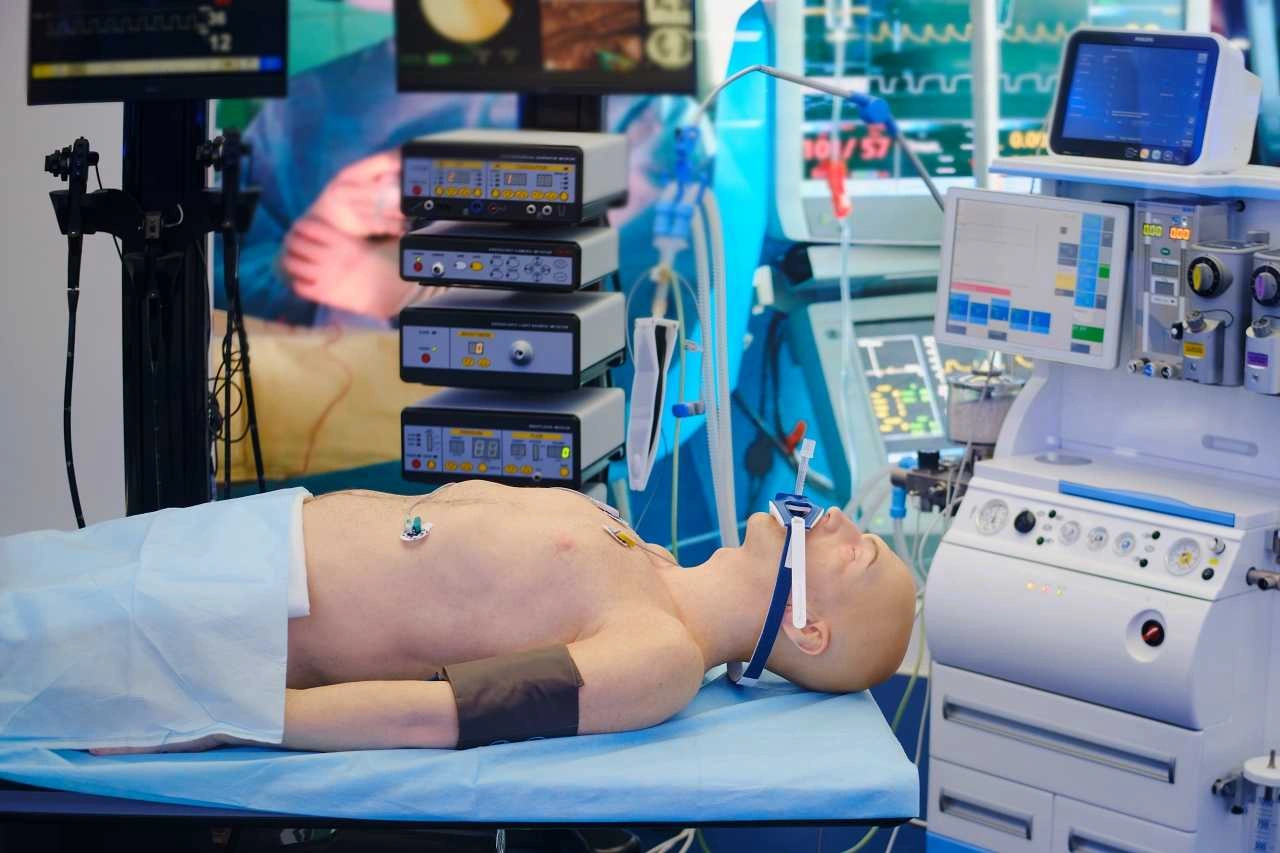
Bipolar vs. Monopolar: Choosing the Right Electrosurgery Mode – Modern surgical procedures have moved far beyond the traditional scalpel. In today’s operating rooms—particularly during high-precision tasks like ophthalmic surgery—surgeons rely heavily on a device known as the Electrosurgical Unit (ESU). This instrument has become indispensable due to its unique ability to cut tissue and control bleeding simultaneously using electrical energy.
The Physics of Electrical Energy in Tissue
The fundamental principle of electrosurgery lies in the application of high-frequency alternating current (AC). These frequencies typically range from 100 kilohertz to 5 megahertz, with voltages spanning from 200 to as high as 10,000 Volts. This current is passed directly through the tissue to generate controlled thermal energy.
The clinical objective of this heat varies depending on the specific surgical needs. A surgeon can adjust the device to cut through tissue, coagulate blood vessels, ablate specific growths, or even shrink tissue masses. This versatility is possible because the ESU generator can modify electrical waveforms. It is the change in these waveforms that dictates whether the tissue will be sliced cleanly or thickened (coagulated) to stop hemorrhaging.
Strategic Differences: Bipolar vs. Monopolar Methods
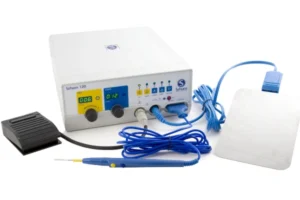
In clinical practice, electrosurgery is categorized into two primary modes, each with a distinct electrical circuit design. The choice between them depends entirely on the type of surgery and the required safety parameters.
1. Bipolar Electrosurgery: The “Wet Field” Specialist
The bipolar method is widely regarded as the safer and more precise option for delicate or confined spaces. In this system, both the active and return electrode functions are housed within a single instrument, usually shaped like a pair of forceps.
The electrical current only flows between the two tips of the forceps. This means only the specific tissue grasped by the instrument is part of the electrical circuit. A major advantage of this method is its ability to function in fluid-filled environments. This is why bipolar electrosurgery is the “gold standard” in eye or neurosurgery, as it can effectively coagulate even in a “wet field” where fluids are present.
2. Monopolar Electrosurgery: Versatility for Broader Areas
Unlike the bipolar system, the monopolar method places only the active electrode at the surgical site. To complete the electrical circuit and allow the current to flow, a patient return electrode (often called a “dispersive pad”) must be attached to another part of the patient’s body, such as the thigh or back.
The current travels from the surgical tip, through the patient’s body, and exits via the return pad. Because it covers a broader range, the monopolar system is highly efficient for surgeries involving larger tissue areas. However, this system requires meticulous attention to the placement of the return pad to prevent unintended risks.
Ensuring Patient Safety in the Operating Room
Advanced technology carries a high responsibility for safety. One of the most significant risks in monopolar ESU use is the potential for burns at the site of the return electrode. This occurs if the heat generated by the current is not safely dissipated or spread across a wide enough area.
To prevent this, the size and conductivity of the return pad must meet strict clinical standards. If the pad is not perfectly adhered or is too small for the patient, the heat will concentrate at a single point, potentially causing skin burns. Furthermore, the use of high frequencies (above 100 kHz) is intentional; it prevents the stimulation of the patient’s nerves and muscles, ensuring no involuntary muscle contractions or “shocks” occur during the procedure.
Electrosurgical Units have fundamentally changed how surgeons operate, offering a level of control far superior to traditional methods. By understanding the critical differences between precise bipolar techniques for wet environments and efficient monopolar techniques for broader applications, medical teams can ensure that procedures are not only fast but also meet the highest safety standards. For healthcare facilities, investing in high-quality ESU generators and maintaining a deep technical understanding of electrical waveforms is key to delivering optimal surgical care.